Monday 9th June 2025
FLIPBOOK DE LOS SECTORES ECONÓMICOS
Wednesday 21st May 2025
FINAL TASK:
COLLAGE: A CITY!
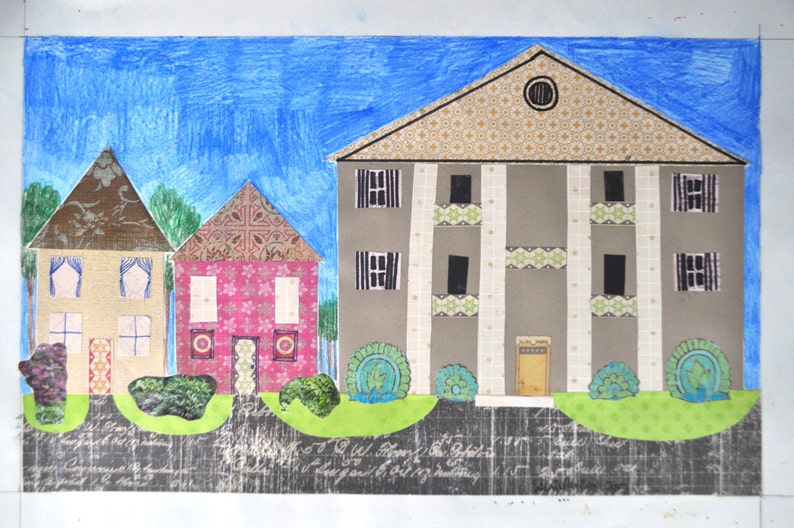
Vamos a diseñar el collage de una ciudad. A continuación, tenemos los pasos a seguir:
1ºEn una cartulina en blanco haz el diseño de tu ciudad en lapiz.
2ºTiene que incluir tres ejemplos de servicios locales y su nombre en inglés.
3ºSu diseño debe incluir diferentes materiales y texturas y tienes que utilizar materiales de casa para reciclar.
4ºNo olvides preparar tu exposición para hacerla en clase con tus compañeros!


Monday 30th April 2025
TOWNS AND CITIES
1.Completa el siguiente esquema.
2.Busca información sobre tu localidad: principales calles, cuántas personas viven en ella, fiestas, en qué fechas se celebran, otros eventos...
Monday 24th March 2025
REALIZAMOS LA MAQUETA DEL CURSO DE UN RÍO

Monday 24th February 2025
MARINE WATERS
-Benefits from oceans and seas
ACTIVIDADES:
-Lee el texto sobre los movimientos de las aguas marinas. Expresa con dibujos lo que hemos aprendido. Añade el texto que necesites.
-Completa el siguiente esquema:Las aguas marinas.
Monday 3rd February 2025
AN ANIMAL FACT FILE!


STEP 1. Choose an animal. It can be your favourite animal or an animal you want to learn more about.
STEP 2. Find out everything you can about your animal and make notes. Use the list below to help you.
STEP 3. Draw a picture of your animal and be ready to present it to your class!!
------------------------------------------------------------------------------------------------------------------------
STEP 1. Escoge un animal. Puede ser tu animal favorito o uno sobre el cual quieras aprender e investigar.
STEP 2. Investiga y toma notas. Puedes seguir la lista de abajo para guiar tu investigación:
STEP 3. Haz un dibujo de este animal, pega fotografías y prepárate para contárselo a tus compañeros!!
Monday 2th December 2024
FOREST DIORAMA
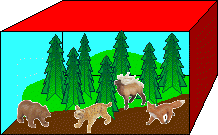
Supplies Needed:
- Shoe box (or similar sized box)
- Construction paper or tempera paint
- Scissors
- Glue
- Pencil, crayons
- Cotton balls (for clouds)
-Optional: Small plastic animals or plants
Instructions:
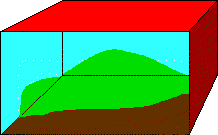
First make a background in your box. Either use construction paper or tempera paints (the construction paper is easier and less messy) to depict a blue sky, brown soil and green plants. Bits of cotton balls glued to the sky make nice clouds.
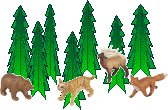
Make trees and animals from construction paper cut-outs (or use small plastic models, if you have them). For easy-to-make paper 3-D evergreen trees, click here. Some forest animals include bears, deer, rabbits, foxes, wolves, birds, butterflies, and wild cats. For a page that has coniferous forest (taiga) animal information and pictures, click here. For a page that has temperate deciduous forest animal information and pictures, click here.
Glue the trees and animals onto the diorama.
Cover or paint the outside of the box (if necessary).
Write your name on your diorama. You now have a forest diorama.
Monday 28th October 2024
A MAP OF THE HUMAN BODY!
The human body is very complicated. Inside each person there are lots of different body systems and organs that do important jobs.
You are going to make a map to show where some of these organs are. You may need to look in a reference book or on the Internet to find the information you need.

STEP 1. In your notebook, trace this outline of a human being.
STEP 2. Draw and label the following on your picture: brain, eyes, nose, ears, mouth.
STEP 3. Match the organs below to the body system they are part of:
Organs:
1.heart
2.lungs
3.kidneys
4.stomach
Body systems:
a.The circulatory system
b.The respiratory system
c.The digestive system
d.The excretory system
STEP 4. Next to your drawing write the names of the four body sytems from Step 3. Write one sentence to explain what each of the body sytems does.
STEP 5.Colour your drawing using different colours for the different systems.
_______________________________________________________
UN DIAGRAMA DEL CUERPO HUMANO!
El cuerpo humano es complejo. Dentro de cada persona hay montones de sistemas y órganos que realizan diferentes funciones.
Vamos a hacer un diagrama para enseñar donde estan algunos de estos órganos. Puede que necesites mirar en libros específicos relacionados con la materia o en Internet para encontrar la información necesaria.
PASO 1. En tu cuaderno, pega la figura de este ser humano.
PASO 2. Dibuja y señala en tu dibujo: el cerebro, los ojos, la nariz, las orejas y la boca.
PASO 3. Une los órganos que aparecen a continuación con el sistema del cuerpo al que pertenecen:
Órganos:
1.Corazón
2.Pulmones
3.Riñones
4.Estómago
Sistemas del cuerpo:
a)El sistema respiratorio
b)El sistema circulatorio
c)El sistema digestivo
d)El sistema excretor.
PASO 4. Al lado de tu dibujo, escribe el nombre de los cuatro sistemas del cuerpo del ser humano del paso 3. Para cada uno, escribe una oración sencilla que explique la función que realiza cada uno.
PASO 5.Colorea tu dibujo usando diferentes colores para cada uno de los sistemas.


